

Rose gold is the third metal, the one nobody teaches you how to wear. Yellow gold has its rules, silver has its own guide, and rose gold sits in between, warm like yellow gold, soft like silver, and easy to get wrong. Wear it with the wrong colours and it disappears. Layer it badly and it tangles into a pink knot. Mix it with yellow gold without a plan and the two metals fight instead of blending. This guide to rose gold jewelry holiday parties fixes all of that with decisions, not guesses, so by the end you will know exactly which pieces to wear, how to layer them, and when to leave the rose gold in the box and reach for silver instead.
The whole method fits on one idea: rose gold is a warm blush metal, so it loves warm skin, warm colours, and one clear hero piece. Everything below is a decision built on that idea, your undertone first, then your hero piece, then your layers, then your metals, then your neckline, your colours, and your occasion. Answer the eight decisions in order and the look builds itself.
If you are still choosing between the metals, our gold vs silver jewelry for holiday parties guide compares the two classics side by side, and this guide picks up where it leaves off, with the metal that blends them both.
The Rose Gold Decision in 30 Seconds
- Wear rose gold if your skin has warm or neutral undertones, your veins look greenish, gold jewelry has always flattered you, and your party outfit is black, burgundy, forest green, cream, or soft red.
- Pick silver instead if your skin is cool toned, your veins look blue, silver has always been your metal, and your outfit is icy blue, cool grey, or bright white. Our how to style silver jewelry for holiday parties guide builds that look instead.
- The one rule that matters most: one hero piece leads, everything else whispers. A rose gold statement necklace means quiet earrings. Rose gold chandelier earrings mean a bare neckline.
- The mixing rule: rose gold and yellow gold blend when one metal leads and the other accents, and they clash when both shout at the same volume.
- The layering rule: three necklaces at three different lengths, 16, 18, and 20 inches, in three different textures, never three of the same chain.
The 8 Decisions
1. Find Your Undertone in Two Minutes

Rose gold flatters warm and neutral undertones best, because its copper blush echoes the warmth already in the skin. Cool undertones can still wear it, but they need to choose their pieces more carefully, and this test tells you which side you are on before you buy anything. Hold your wrist up in natural daylight, by a window, not under a yellow bathroom bulb. Look at the veins on the inside of your wrist. If they look greenish, your undertone is warm, and rose gold will glow on you. If they look blue or purple, your undertone is cool, and rose gold will still work, but silver will usually flatter you more. If you genuinely cannot tell, green in one light and blue in another, your undertone is neutral, and rose gold is your easiest metal, because it sits halfway between warm yellow gold and cool silver. Try the jewelry test too. Hold a rose gold piece against your cheek in daylight, then hold a silver piece the same way. The metal that makes your skin look brighter and your eyes look clearer is your metal. The one that makes your skin look tired or grey is not. This takes two minutes and it saves you from buying a necklace you will never wear. The mistake is buying rose gold because it is pretty in the box. In the box every metal is pretty. On your skin, only your undertone decides, so test first, buy second.
Tip: Check your veins in daylight, green means warm and rose gold will glow, blue means cool and silver will usually flatter you more, and if you cannot tell, your undertone is neutral and rose gold is your easiest metal.
2. Pick One Hero Piece and Let It Lead

Every good jewelry look has one hero and a supporting cast, and rose gold is no exception. The hero is the piece people notice first, a statement pendant, a sculptural cuff, a pair of chandelier earrings, or a bold ring. Everything else stays quiet so the hero has room to shine. When two pieces compete, the eye does not know where to look, and the whole look reads as busy instead of expensive. Choose the hero by your outfit, not by your jewelry box. A bare neckline, a scoop or a V, calls for a necklace hero, because the skin is the frame. A high neckline or a turtleneck calls for an earring hero, because the neck is covered and the face needs the light. A long sleeve dress with a plain bodice calls for a cuff or a ring stack, because the wrist and the hand are the visible skin. Pick the hero that matches the open space in your outfit and the rest of the look falls into place. Once the hero is chosen, keep the supporting pieces small and in the same metal family. A statement rose gold pendant pairs with tiny rose gold studs and a thin rose gold bangle. Rose gold chandelier earrings pair with a bare neck and a slim ring. If you love stacking small earrings, our gold earring stack ideas show how to layer studs and hoops across the ear, and the same rule applies here, the stack is the hero, so the necklace stays quiet. The mistake is wearing a statement necklace, statement earrings, and a statement cuff all at once. Each piece is beautiful alone, and together they cancel each other out, so pick one hero and let the rest whisper.
Tip: Choose the hero by the open space in your outfit, a necklace for a bare neckline, earrings for a high neck, a cuff for long sleeves, then keep every other piece small and quiet.
3. Layer Necklaces by Length, Not by Luck
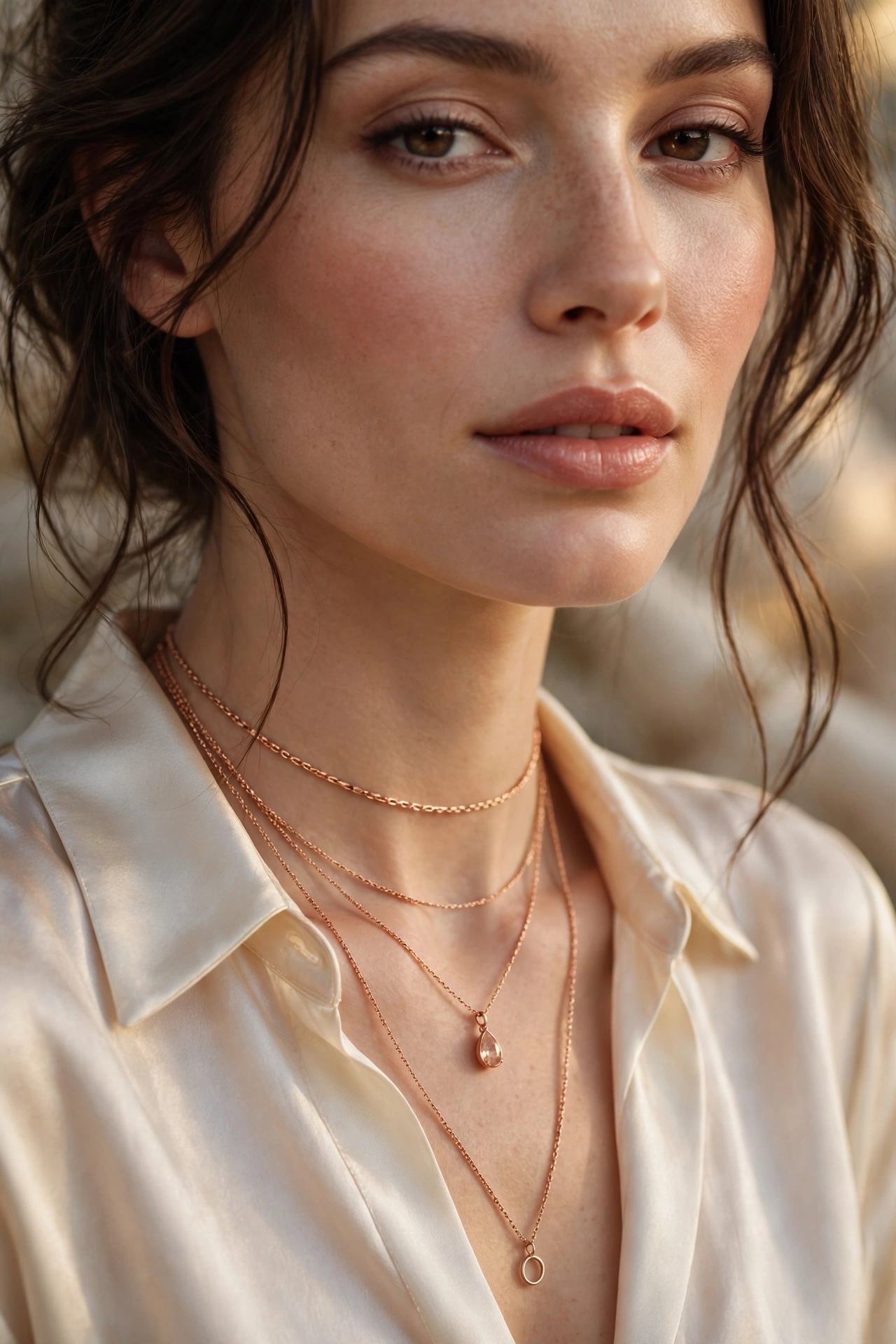
Layered rose gold necklaces look effortless in photos and tangled in real life, and the difference is length. Three necklaces at the same length will always tangle, because they sit on the same line and rub against each other all night. Three necklaces at three different lengths fall into three clean lines, and they stay there. Use the 16, 18, and 20 inch rule. The shortest sits at the collarbone, a fine choker or a slim chain. The middle one, 18 inches, carries the pendant, a small charm, a morganite drop, or a tiny disc. The longest, 20 inches, is the quietest piece, a delicate station chain or a fine rope chain with nothing on it, or a very small charm. Two inches between each length is enough space for the chains to move without catching, and the pendant on the middle chain becomes the hero of the layer. Vary the textures too. A smooth snake chain, a fine cable chain, and a beaded station chain will never tangle the way three identical cable chains do, because the different surfaces slide past each other instead of gripping. Keep the total weight light, three fine chains weigh less than one chunky one, and they photograph better, because the eye reads three fine lines as delicate and one heavy line as a single piece. The mistake is layering three necklaces of the same length and the same chain. They tangle within an hour, and by midnight you are wearing one knotted mess. Different lengths and different textures, and the layers stay clean all night.
Tip: Layer at 16, 18, and 20 inches with a different texture on each chain, put the pendant on the middle one, and keep the longest chain plain so the layers never tangle.
4. Mix Rose Gold With Yellow Gold Without Clashing
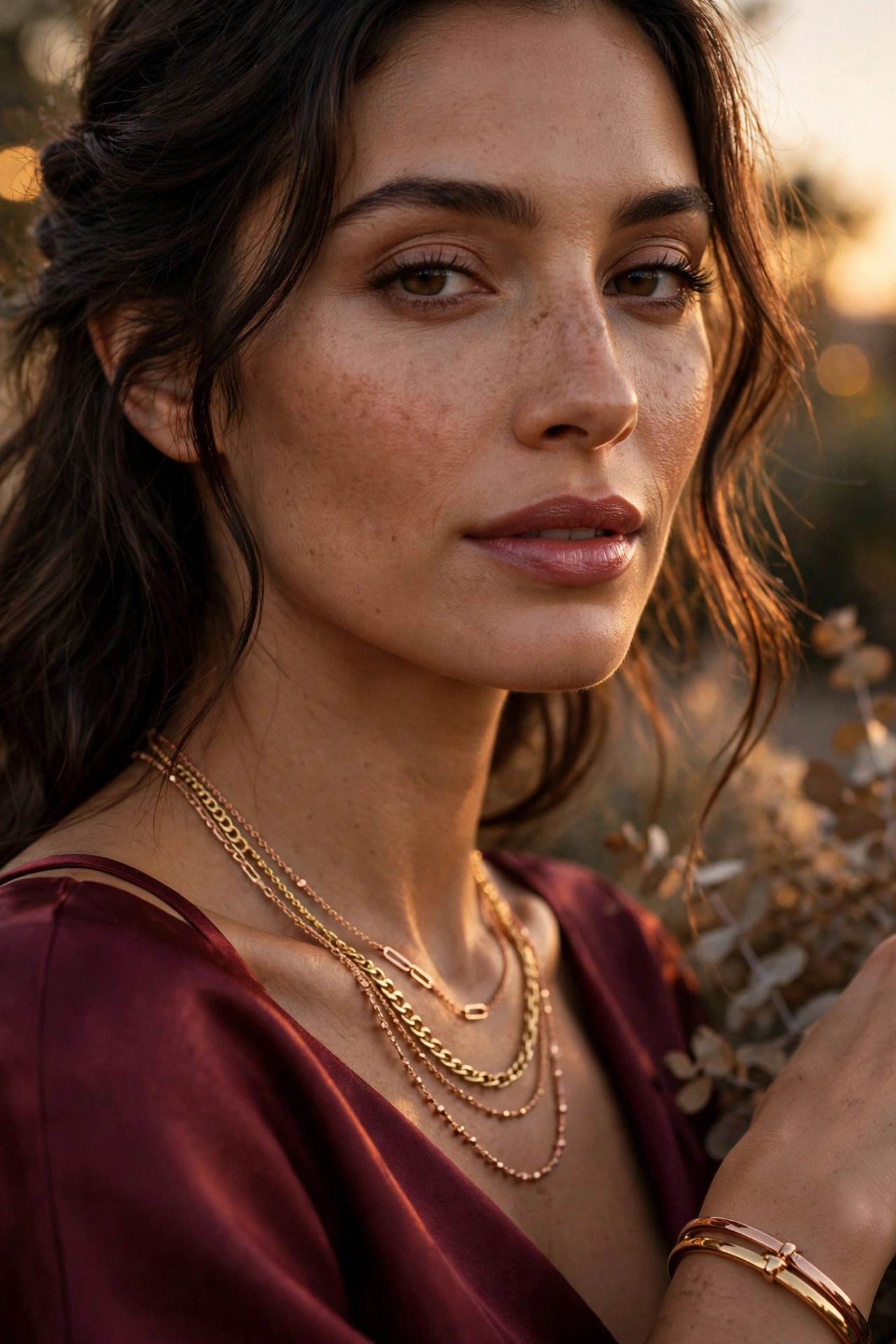
Rose gold and yellow gold are cousins, both warm, both golden, and they blend beautifully when one leads and the other accents. They clash when both shout at the same volume, two chunky yellow gold chains next to two chunky rose gold chains, because the eye reads two competing golds instead of one blended glow. The fix is a ratio, not a rulebook, roughly two parts of one metal to one part of the other. Pick your lead metal first. If rose gold is the lead, wear two rose gold pieces and one yellow gold accent, a yellow gold ring, or a yellow gold clasp, or a thin yellow gold chain between two rose gold ones. If yellow gold is the lead, flip it, two yellow gold pieces and one rose gold accent. The accent should be the smallest piece in the look, because a small accent reads as intentional and a large accent reads as a mistake. A bridge piece makes the mix look deliberate. A two-tone necklace, a ring with both metals, or a bangle that alternates rose and yellow gold links tells the eye the mix was planned. Without a bridge, the two metals sit side by side and the eye keeps comparing them. With a bridge, they read as one story. Keep the finishes matched too, all polished or all brushed, because a polished yellow gold next to a brushed rose gold looks like two different jewelry boxes. The mistake is mixing equal amounts of both metals at equal sizes. Two and two, chunky and chunky, reads as indecision. Two parts lead, one part accent, one bridge piece, and the mix looks like you meant it.
Tip: Mix at a two-to-one ratio with one metal leading, add one two-tone bridge piece so the blend looks deliberate, and match the finishes, all polished or all brushed.
5. Mix Rose Gold With Silver, and Know When Silver Wins
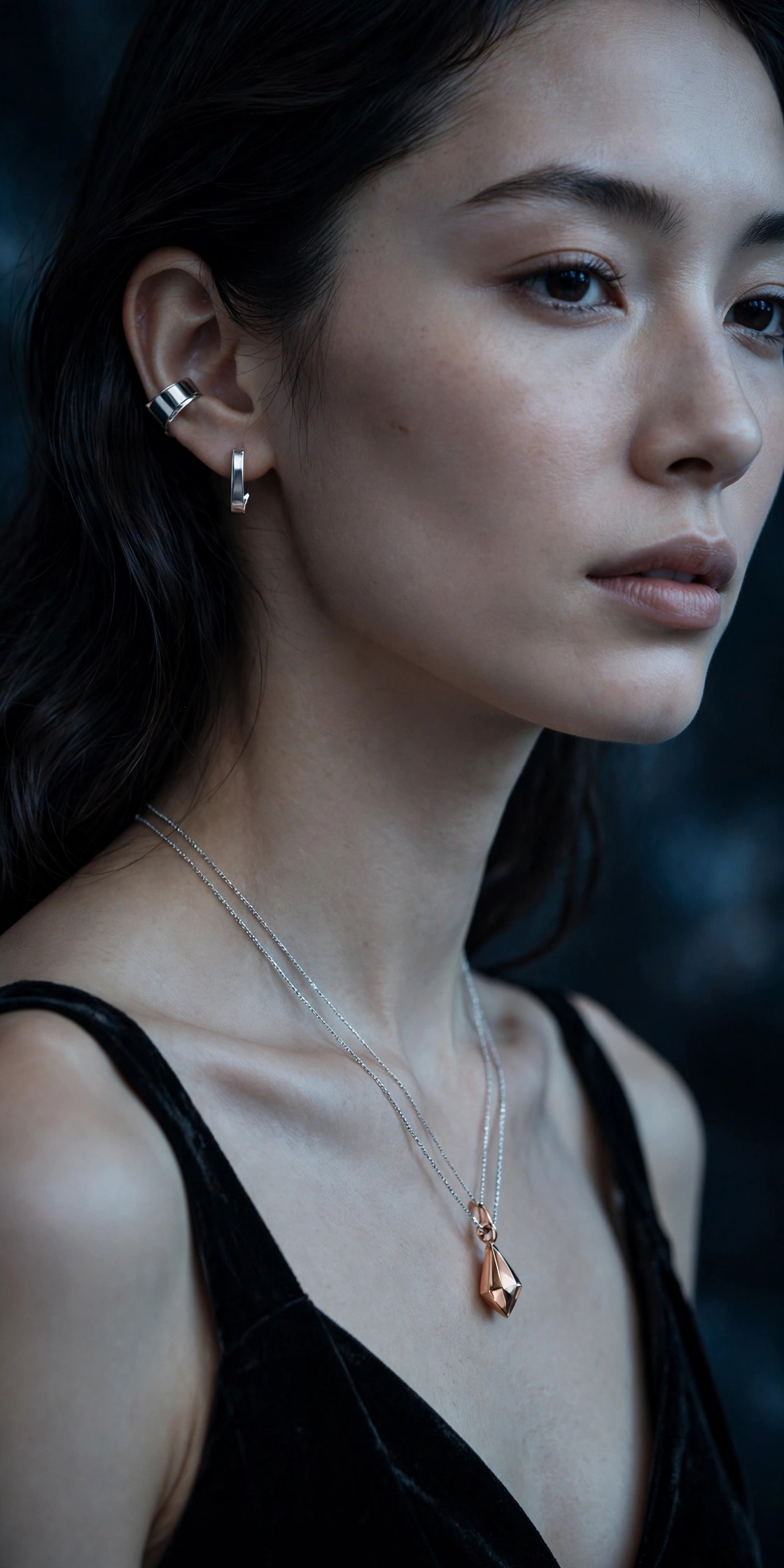
Rose gold and silver are the most modern mix in this guide, warm blush against cool shine, and it works because the contrast is the point. A rose gold pendant sitting between two fine silver chains looks intentional in a way that two similar metals never do, because the eye sees the warm piece glowing inside the cool frame. The trick is letting the rose gold be the warm accent and the silver be the cool frame, never the other way round. Keep the silver pieces fine and the rose gold piece slightly bolder, so the warm metal reads as the hero and the cool metal reads as the setting. A slim silver cuff with a rose gold ring, a fine silver chain with a rose gold pendant, a silver hoop with a tiny rose gold stud above it, these are the combinations that work. If the silver piece is chunky and the rose gold piece is fine, the silver swallows the rose gold and the mix looks accidental. Know when to stop mixing and let silver win. If your undertone is cool, if your outfit is icy blue, cool grey, or bright white, or if the party is a black tie event with a silver sequin dress, silver alone will flatter you more than any mix. Rose gold against icy blue turns the blue colder and the rose gold pinker, and neither looks its best. In that case, wear the silver look properly, our how to style silver jewelry for holiday parties guide builds it from the undertone up, and save the rose gold for the burgundy dress. The mistake is forcing rose gold into a cool outfit because you already own the piece. The metal should serve the outfit, not the other way round, so when the outfit is cool, let silver win.
Tip: Let silver be the fine cool frame and rose gold the slightly bolder warm accent, and when the outfit is icy blue, cool grey, or bright white, skip the mix and wear silver alone.
6. Match the Necklace to Your Neckline

A necklace and a neckline are a pair, and when they match, both look better. When they fight, the necklace disappears into the fabric or hangs awkwardly over it, and the money you spent on the piece is wasted. The rule is simple, the necklace should echo the shape of the neckline, not copy it exactly and not ignore it. A V-neck loves a pendant, because the pendant falls into the V and follows its line. Choose a pendant on an 18 inch chain so it sits just above the point of the V, not on it. A scoop neck loves a short necklace, a choker or a 16 inch chain with a small pendant, because the curve of the scoop frames the curve of the chain. A strapless dress loves a choker or a statement collar, because the bare shoulders and the bare neck are one open canvas. A high neck or a turtleneck loves long necklaces, 20 inches and longer, because the chain has fabric to fall against, and it loves earrings even more, because the neck is covered. Our how to match a gold necklace to your party dress neckline guide walks through every neckline with a full length chart, and the same shapes apply here, only the metal changes. The one difference for rose gold is colour, a rose gold chain against a burgundy V-neck glows, while the same chain against a bright white scoop neck can look pink by comparison, so check the pairing in daylight before the party. The mistake is wearing a long pendant with a high neck, where the pendant hangs on fabric and swings like a lost charm, or a choker with a deep V, where the choker sits far above the open skin and looks stranded. Match the length to the neckline and the necklace earns its place.
Tip: Echo the neckline shape, a pendant for a V-neck, a short chain for a scoop, a choker for strapless, long layers or earrings for a high neck, and check rose gold against white in daylight first.
7. Match Rose Gold to Your Party Colours

Rose gold has favourite colours, and your party outfit is probably one of them. Black is the easiest, because black makes every metal glow and rose gold against black velvet looks like candlelight. Burgundy is the richest, because the wine red and the blush metal share the same warm family, and the combination photographs like luxury. Forest green is the most festive, because the deep green and the warm pink are opposites on the colour wheel, and opposites make each other brighter. Cream and champagne are the softest, because the warm neutrals and the blush metal melt into one glow, which is beautiful but needs a bolder hero piece so the jewelry does not disappear. Soft red is the boldest, because red and rose gold share warmth, and the pair reads as one confident colour story. Two colours need care. Bright white can make rose gold look pinker than it is, so if the dress is bright white, choose a bolder rose gold piece, a cuff or a statement pendant, rather than a fine chain that fades against the fabric. Icy blue and cool grey fight rose gold, because the cool fabric and the warm metal pull in opposite directions, and that is the outfit where silver wins, as step 5 explains. Match the rest of your metals too. Rose gold jewelry pairs with rose gold bag hardware, a blush clutch clasp, or a warm gold shoe buckle, and it fights with a silver clutch clasp or cool chrome heels. One warm metal story from neck to shoes, and the look feels finished. The mistake is wearing rose gold with a cool outfit and wondering why the jewelry looks pink and the outfit looks cold. The metal and the colour are a pair, so pick them together, not separately.
Tip: Rose gold loves black, burgundy, forest green, cream and soft red, needs a bolder piece against bright white, and loses to silver against icy blue and cool grey, so match your bag hardware to the same warm metal.
8. Build the Look by Occasion
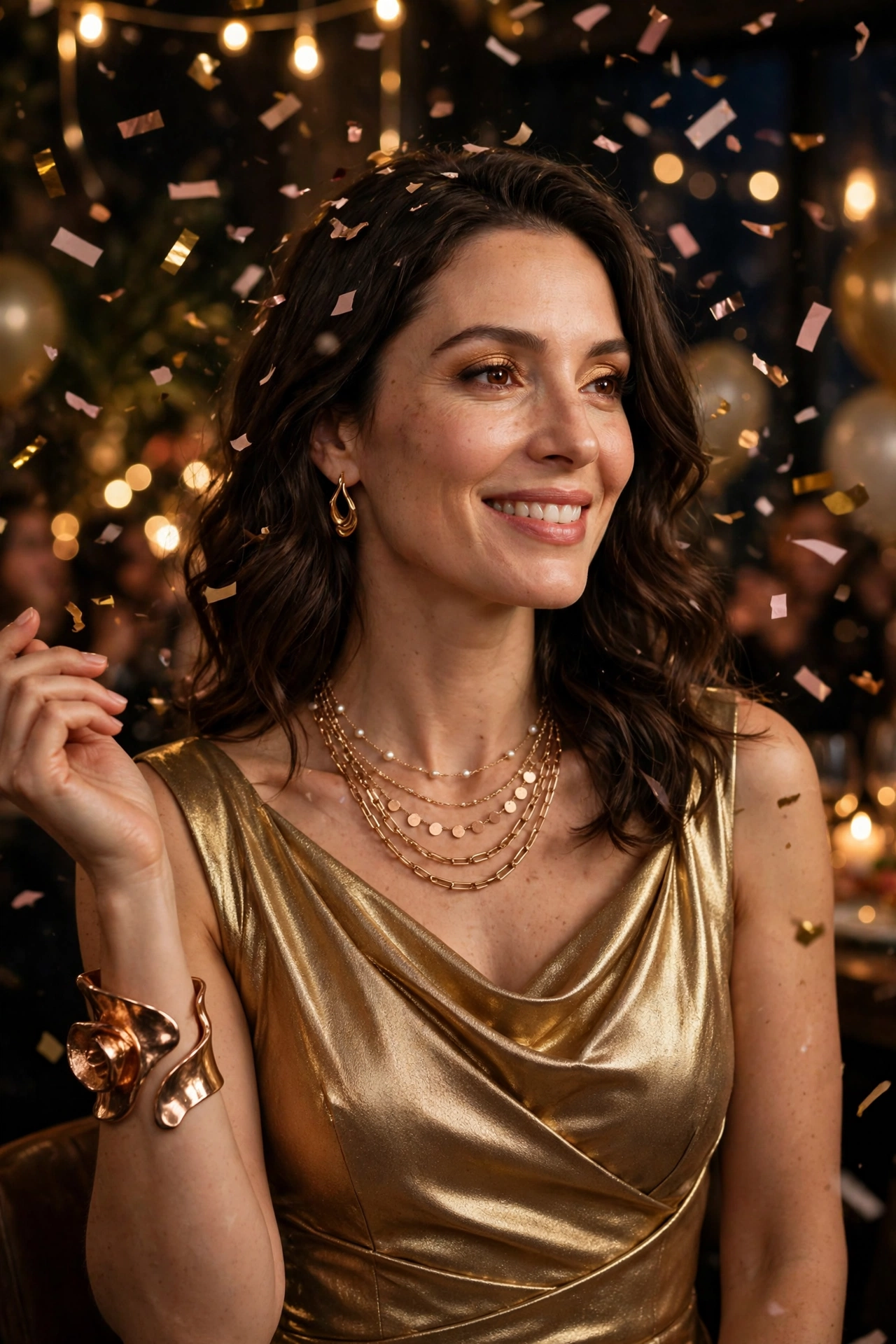
The same rose gold pieces build three different party looks, and the difference is how much you wear, not which pieces you own. The office party wants the quietest version, because the audience is your colleagues and the lighting is bright. Wear one hero, a fine rose gold pendant or small rose gold hoops, with a black or burgundy dress, and keep the rest of the jewelry off. A satin finish on the metal, not a high polish, reads as polished without glare under office lights. Christmas dinner wants the warmest version, because the light is candlelight and the evening is long. Layer the necklaces from step 3, the 16, 18, and 20 inch trio, with a forest green velvet dress or a burgundy satin dress, and add a thin rose gold bangle. The candlelight does the work, the layers catch it at three different heights, and the look feels festive without trying too hard. Keep the earrings small, because the layered necklaces are the hero. New Year’s Eve wants the boldest version, because the night is long and the photos run past midnight. This is the night for the sculptural cuff, the chandelier earrings, or the statement pendant, one hero at full volume, with a gold or black dress and a clutch with warm gold hardware. If you wear the chandelier earrings, keep the neck bare. If you wear the statement pendant, keep the earrings to studs. The rule from step 2 still holds at midnight, one hero, everything else whispers. The mistake is wearing the New Year’s Eve version to the office party, or the office version to New Year’s Eve. The pieces are the same, the volume is different, so turn the volume to match the room.
Tip: Office party, one quiet hero in satin finish; Christmas dinner, the three-length necklace layer in candlelight; New Year’s Eve, one bold hero at full volume, and never two heroes at once.
Mistakes That Make Rose Gold Look Cheap
- Two heroes at once. A statement necklace plus statement earrings plus a statement cuff cancel each other out, so pick one hero and let the rest whisper.
- Three necklaces at the same length. Same-length chains tangle into a knot, so layer at 16, 18, and 20 inches with different textures.
- Equal parts rose gold and yellow gold. Two and two at equal sizes reads as indecision, so mix at two to one with a two-tone bridge piece.
- Rose gold against icy blue or cool grey. The cool fabric and the warm metal fight, so let silver win that outfit.
- A fine chain against bright white. The chain disappears and only the pink shows, so choose a bolder piece against bright white.
- Buying before the undertone test. Rose gold is pretty in the box for everyone, and on the skin only your undertone decides, so test first.
Pro Tips for Rose Gold That Looks Expensive
- Start with the undertone test in daylight, because the metal that brightens your skin in daylight is the metal that photographs well at night.
- Buy the hero first and the supporting pieces second, because a look built around one strong piece always beats a box of pretty equals.
- Keep a two-tone bridge piece in your collection, a ring or a bangle with both rose and yellow gold, because it makes every future mix look deliberate.
- Store layered necklaces separately, each in its own pouch, because three fine chains stored together tangle before you even wear them.
- Polish rose gold with a soft, dry cloth after each party, because the copper in the alloy tarnishes faster than yellow gold and a dull rose gold reads as old.
- For the full party version of this metal, with office, cocktail and black tie looks side by side, the Atolea guide to styling rose gold jewelry for everyday and parties agrees with the rule here, treat rose gold as a modern neutral, mix it with silver and yellow gold in small doses, and let one sculptural piece lead at a party.
Frequently Asked Questions
Does rose gold suit warm or cool skin tones?
Rose gold suits warm and neutral undertones best, because its copper blush echoes the warmth in the skin. Cool undertones can wear it, but silver usually flatters them more, and rose gold works best for them as a small accent, a ring or a pendant, rather than a full set. Check your veins in daylight, green means warm, blue means cool, and if you cannot tell, your undertone is neutral and rose gold is your easiest metal.
Can I mix rose gold with yellow gold?
Yes, when one metal leads and the other accents, at roughly two parts to one, with a two-tone bridge piece to make the mix look deliberate. Keep the finishes matched, all polished or all brushed. Equal amounts of both metals at equal sizes clash, because the eye reads two competing golds instead of one blended glow.
Can I mix rose gold with silver?
Yes, and it is the most modern mix in this guide. Let silver be the fine cool frame and rose gold the slightly bolder warm accent, a rose gold pendant between two fine silver chains, or a slim silver cuff with a rose gold ring. If the outfit is icy blue, cool grey, or bright white, skip the mix and wear silver alone.
What colours go best with rose gold jewelry?
Black, burgundy, forest green, cream, champagne, and soft red, because all of them share rose gold’s warmth. Bright white needs a bolder rose gold piece so the jewelry does not disappear, and icy blue and cool grey fight the metal, so silver is the better choice with those colours.
How do I stop layered rose gold necklaces from tangling?
Layer at three different lengths, 16, 18, and 20 inches, with a different texture on each chain, and put the pendant on the middle one. Store each necklace in its own pouch, because three fine chains stored together tangle before you wear them, and never layer three identical chains at the same length.
Final Thoughts
Rose gold is not a difficult metal, it is a metal that rewards decisions. Test your undertone first, because that one test decides whether rose gold glows on you or merely sits there. Pick one hero piece and let it lead, because a look with one hero always reads as more expensive than a look with three. Layer by length, mix by ratio, match the necklace to the neckline and the metal to the colours, and turn the volume to match the room, quiet for the office, warm for Christmas dinner, bold for New Year’s Eve.
If the undertone test pointed you toward silver instead, that is a good result too, our how to style silver jewelry for holiday parties guide builds that look properly, and our gold vs silver jewelry for holiday parties guide compares the two classics when you are still choosing. For more rose gold inspiration across the whole Jewelry category, browse our Jewelry guides, and wear the metal that loves your skin back.